
free to be in the media
nonprofit shifts focus
By: The Press Democrat | Published 06.13.2024
Women in Conversation: Women Shaping the North Bay
By: The Press Democrat | Published 07.26.2026
Three generations of Bisbee Women Helping Teens
By: Mayacamas Mountain Living | Published 04.01.2024 | Link to PDF of article
Meet Free to Be: Helping Sonoma County Teens Feel Grounded in Who They Are
By: SOMO Village | Published 11.11.2026
Santa Rosa women's group creating sense of belonging, community
By: The Press Democrat | Published 08.05.2026
full articles below
Nonprofit Shifts Focus
By: The Press Democrat | Published 06.13.2024
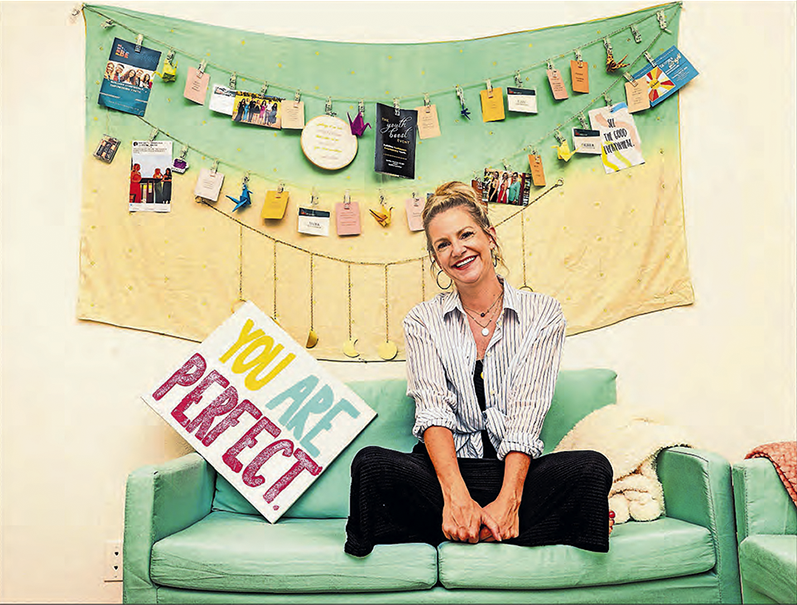
Free to Be, a Santa Rosa nonprofit organization that for decades has offered student programs focused on abstinence and sexual risk avoidance, has a new mission, which its leaders say is more in line with challenges faced by young people today.
The new curriculum addresses mental health concerns and helps young people bolster life skills in the face of ever-present social media and being tethered to smartphones.
The pivot has been in the works for years and was both natural and necessary, said executive director Leslie Bisbee Jordan.
“The risk and the behaviors have changed, and if we want to stay relevant we have to pivot to what they are today,” she said. “Now it’s kind of internal — anxiety, depression, emotional health and the social media aspect of it.”
If Jordan’s name sounds familiar to those who know Free to Be’s long history in Sonoma County, it should.
Leslie Jordan is the daughter of Free to Be founder and longtime executive director Sue Bisbee. Bisbee founded the nonprofit in 1992 and shepherded it through its prime, when presentations reached more than 7,500 students a year in Sonoma County.
But Free to Be faced hurdles over the years, namely loss of federal grant funding and threats of lawsuit from the American Civil Liberties Union over the abstinence-focused education. That reached a boiling point in 2009, scaring many local school districts from using Free to Be presentations out of fear of litigation.
Today the focus is no longer abstinence, and Jordan makes clear the group has no religious affiliation.
Jordan, who took the helm two years ago, said the group’s focus has been evolving to meet the needs of students.
Kids are facing different challenges than they were in 1992.
Data from the CDC’s 2021 Youth Risk Behavior Survey showed that since 2010, the percentage of high school students who have had sex has fallen by 17 percentage points — a 20-point decline among boys and a 15-point decline among girls.
Between 1990 and 2017 there has been a 73.6% decline in the teen-pregnancy rate in the U.S., according to the Guttmacher Institute. The 2021 report showed that in 2017, pregnancy rates for women aged 24 or younger reached their lowest recorded levels.
Shifting challenges
Today, national studies and local surveys show kids are dealing with different challenges.
Nearly 4 in 10 high school students in Sonoma County in 2020 had one or more failing grade and more than 7 in 10 said they felt deep anxiety about the future, according to a YouthTruth survey.
In both 2022 and 2023, the survey showed frequent depression and anxiety among youth as widespread obstacles to kids’ ability to learn and thrive.
The data is even starker for Latino youth.
Suicide rates have nearly doubled for Latinos in Sonoma County since 2016 — outpacing national trends.
The three-year average rate for suicides among Latinos is nearly 10 deaths per 100,000 people in 2020-22. That’s up from 5.4 deaths in 2016-18, according to county data, and taking into account the growing population.
Free to Be has no bilingual peer educators but is working to remedy that, Jordan said.
“I have been talking with Latino Service Providers to collaborate and bridge that gap,” she said. “There are so many good organizations out there, if we can all figure out how to work together and support each other, I think we can do a lot of wonderful things.”
Jordan said the data locally and nationally point to a growing, and frightening, problem with kids’ mental health.
The organization is focusing on giving kids, and in some cases their parents, tools to navigate life online, life with social media and the young adult years in general.
“It’s personal. I’m worried,” said Jordan, a mother of three. “I want the youth to feel like the community has them, that we’ll be the safety net for them.”
That came into full focus during the pandemic when so many young people were isolated from peers, learning from home and on screens for hours at a time, said 7-year Free to Be veteran Jenean Thom, who stepped back from executive director duties and is now program director.
“As COVID came in it was really apparent that the need was just different for kids,” she said.
And the ever-presence of smartphones has changed the landscape for both parents and their kids.
“When I started … maybe five students in fifth, sixth grade had cellphones. Today maybe five don’t,” she said. “And these are 10-year-olds, I’m surveying them, and they are on TikTok, Snapchat, Instagram, Reddit. It was very eye opening that our programs needed to change.”
The curriculum addresses what is real, what is not, how to handle online bullying, and when to take a time out from screens and social media.
Varying curriculum modules are crafted to be appropriate for fifth and sixth graders, middle school students and high school kids.
And presentations can be bespoke, Jordan said.
School officials have called asking for presentations to address particular issues on campus, she said.
In the last school year, 2,600 students saw a Free to Be presentation, up from 1,500 the years before, Jordan said.
“The demand has been unbelievable,” she said.
Brian Reed, CEO of Summit State Bank, has been on the Free to Be board of directors for at least 20 years.
“The scope, in my opinion, was too narrow before,” he said. “We just see more and more that there is a high level of anxiety and depression and lack of confidence from our youth and it was really exacerbated once again during the pandemic and schools closing and people learning online.”
The nonprofit has been nimble and smart about its change in direction, he said.
“The goals are the same, developing healthy relationships, being able to make good decisions,” he said. “We could have stuck to a narrower mission and who knows? We might not be still around. But broadening our approach, we get to serve a lot of kids in Sonoma County. I think it’s been a good model.”
To that end, Free to Be is ramping up its training program for both teens and young adults to become peer educators. A teen training will be held Aug. 7 followed by a talk by speaker David Galvan that evening.
That’s Jordan’s sweet spot, getting teens and young people trained for peer conversation and counseling.
“Mental health is hard to talk about, emotional health is hard to talk about,” she said. “So starting the conversation was the piece that I really wanted to get out there.”
You can reach Staff Columnist Kerry Benefield at 707-526-8671 or kerry.benefield@pressdemocrat.com. On Instagram @kerry.benefield.
Women in Conversation: Women Shaping the North Bay
By: The Press Democrat | Published 07.26.2026
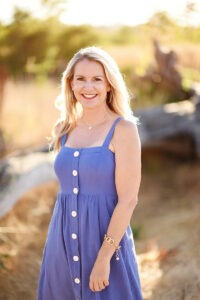 Honoring Women Shaping the North Bay: Leslie Bisbee Jordan
Women in Conversation | The Press Democrat
Sunday, July 26, 2026
The way Leslie Bisbee Jordan is shaping Sonoma County isn’t through being front and center. Her preferred place is “behind the camera,” working behind the scenes, where she says she feels most comfortable. “It’s the mom in me.”
What she excels at, by her own account, is bringing together the right people who know how to get the job done. The funny thing is that once you meet Leslie, it feels almost contradictory not to have her in the spotlight. She is a natural in front of the camera, as evidenced by her role as the narrator for the introductory video on the website for Free to Be, the Sonoma County nonprofit of which Leslie has served as the Executive Director since 2022.
The organization promotes confidence and self-worth in children and teenagers. She leads it with heart, and it shows in the care she gives to everyone the organization touches. Leslie is quick to credit her parents, especially her mother, who founded Free to Be in 1992, as the source of her sense of purpose.
“They taught me that strong communities don’t happen by accident,” she says of her parents. “They happen because ordinary people choose to care.”
But the community Leslie leads is not the one her mother built the organization for, and she is careful to make that clear. The challenges facing young people today are fundamentally different from what adults faced even a decade ago.
For adults, the smartphone arrived as an add-on. It attached itself to lives that were already formed, layered on top of childhoods that happened mostly offline. For the teenagers Free to Be works with, there was never really a “before.” The phone has been integrated into their entire lives, woven into how they learn, socialize, and see themselves, from the very beginning.
Leslie points to what has quietly been taken away. A generation ago, a hard day had an ending. A kid could have a rough afternoon, hear something cruel, feel like they didn’t measure up, and then go home. Close the door. Find their family, or just their own four walls, and get enough distance to remember who they are. Home was where you went to escape, but that escape is largely gone now. The bad day follows them through the screen, to their room, onto the pillow next to them. There is no shutting the door on something that lives in your pocket.
What fills that space, she says, is constant comparison. Children face an endless, scrolling reel of everyone else’s best moments, measured against their own ordinary life.
This is the backdrop against which Free to Be does its work, and it is not an abstract one. According to the 2023-2024 Sonoma County YouthTruth Survey, “more than one in 10 middle and high school students seriously considered suicide in the past year” and more than “60 percent reported emotional struggles like anxiety, stress, and depression as barriers to learning.”
If you or someone you know is struggling, the 988 Suicide & Crisis Lifeline offers free, confidential support 24/7 by call or text.
This is why the mission Leslie leads is not the one her mother founded Free to Be upon, and why it couldn’t be. The organization was built for a different time, facing different risks, and Leslie’s task has been to meet teenagers where they are right now, helping them to build confidence sturdy enough to withstand a world that follows them home. As she puts it, the belief at the heart of everything Free to Be does is a simple one: “When a young person understands their inherent worth and value, they’re more likely to make healthy choices, build healthy relationships, and ask for help when they need it, and speak up when a friend is struggling.” The purpose is the same as it ever was. The pressures it has to answer are not.
If there’s another thing Leslie does well, it’s noticing people. And, more importantly, letting them know they’ve been noticed.
“There are students who are visibly excelling, and there are students who visibly need more assistance,” Leslie says. “But that leaves a huge group of students in the middle who are at risk of… not falling through the cracks, necessarily, but not being noticed in the same way.”
This is also why it matters to Leslie that Free to Be reaches kids inside the school day, rather than as an extracurricular a parent has to know about and sign up for. The students most at risk of going unnoticed are often the ones who’d never raise a hand for a program like this. By living inside the school day (in the classrooms that participate) Free to Be reaches them anyway. No one has to be singled out to be seen.
The Teen Innovator program at Free to Be takes this a step further. As Teen Innovators, high school students get the chance to speak to fifth and sixth graders to encourage them, offer lessons in confidence, and share how they’ve personally overcome challenges. But you don’t have to be chosen to be a Teen Innovator, anyone can volunteer for the role. Participating in the classroom workshops helps the students discover their own worthiness, giving them courage to do so.
Leslie recalls one boy, taller and bigger than other students, who might have been read as tough, not “soft” in the way people picture a mentor for children. She talked with him a while, then told him he’d be the perfect person to become a Teen Innovator. “He looked a bit like, ‘Who, me?’” she remembers. “But he also instantly looked a little bit lighter.” Someone had seen something in him and said so. Not because of his size, and not in spite of it. That recognition changed how he carried himself.
It’s a philosophy she extends to how she thinks about the adults in a young person’s life, too. “They don’t need perfect adults,” she says. “They need present adults.” The ever-presence of cell phones cuts both ways. At a technology workshop, students were asked what they wished their parents understood about their phones. One answer landed harder than the rest: “You’re on it more than I am.”
Yet she’s careful not to describe the teenagers only by what threatens them. Despite everything they face, she says, they are compassionate, thoughtful, and creative. Young people who genuinely want to connect and make a difference.
It is clear Leslie leads by a simple rule: don’t ask anyone to do something you aren’t willing to do yourself. “I spend my days encouraging young people to try hard things and believe they’re capable of more than they think. If I really believe that, then I have to live it too.”
She learns from the very programs she helps teach. She describes one exercise, the kind Free to Be keeps deliberately practical and tangible. A mentor asks a student to pull a tape measure out to 86 inches, then point to 15. Yes, 15 matters. It’s a real and important part of getting to 86. But look how much length is still ahead. Leslie found herself moved by it on her own behalf, thinking about her own transformations and realizing how much more there is still to come. It’s the lesson underneath all of the work: you’re never done growing, and that’s the beauty of it. For a struggling teenager, it’s a way to hold this moment as important without mistaking it for the whole story.
Her ability to notice is key to what makes Leslie so effective, professionally and personally, and it is contagious. After just a short time with her, one feels a little bit lighter, and a little more inspired to build something in their community. Multiply that by every person she meets, and you begin to see how one woman working “behind the camera” can end up shaping the county.
It’s the same impulse behind her involvement in Women for Good, a local group that creates exactly these kinds of openings for connection and empowerment among people who might not otherwise find each other.
Ask Leslie about the biggest opportunity she sees for shaping the community, and her answer is simple: just start. Don’t wait for the perfect moment or the complete skill set. The act of beginning is enough to get things moving, and the rest can fall into place. It loops directly back to what she says she is good at, which is gathering the right people around a shared purpose. Not knowing everything isn’t a reason not to start.
“Leadership isn’t about having all the answers… My role has simply been to listen, bring people together around a common purpose, and keep saying yes to what matters. Community has always been the answer.”
Which brings us back to a woman who feels more comfortable behind the scenes, but says yes to the hard things anyway. This is the example Leslie Bisbee Jordan offers Sonoma County. Do the hard thing. Notice the person no one else did. Start before you feel ready. Beautiful things can come of it.
Source: The Press Democrat, Women in Conversation, July 26, 2026, Section A, Page 12. Presenting and founding partner: Summit State Bank.
Meet Free to Be: Helping Sonoma County Teens Feel Grounded in Who They Are
By: SOMO Village | Published 11.11.2026
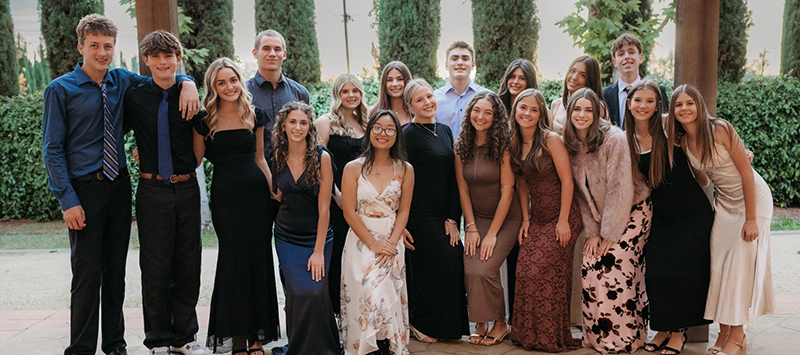
Raising a teenager has always come with its share of worry. Today’s version comes with a screen attached. Between group chats, constant comparison on social media, and the pressure to keep up, many young people are carrying more than we can see.
That’s why we’re proud to spotlight Free to Be, a Santa Rosa nonprofit that has spent more than three decades helping Sonoma County kids grow into confident, grounded young adults. SOMO is a sponsor of their annual fundraiser this November, and we sat down with CEO Leslie Bisbee Jordan to learn more about the work they do for teens and for the parents who love them.
A Local Legacy, Carried Forward
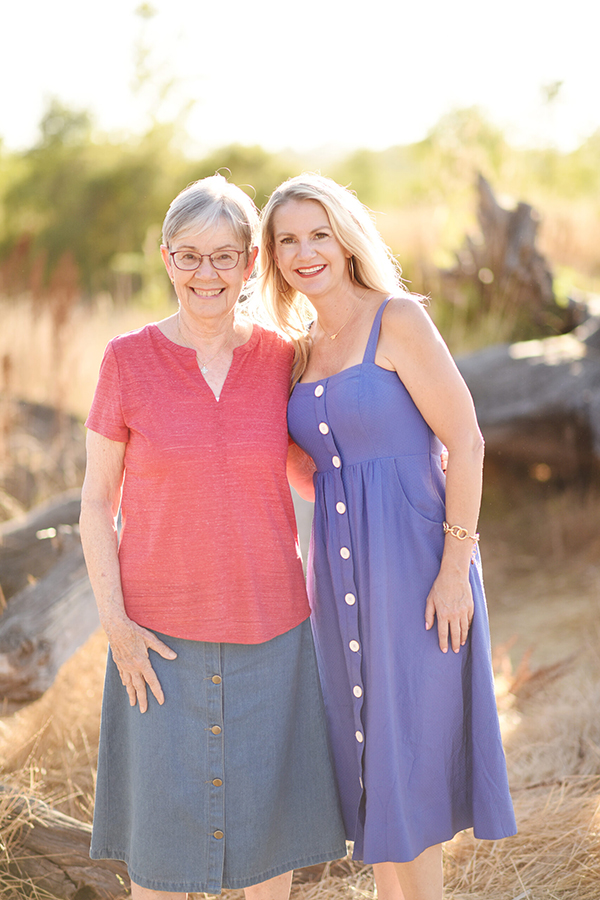
Free to Be founder Sue Bisbee (left) and CEO Leslie Bisbee Jordan. Photo courtesy of Free to Be.
Sue Bisbee founded Free to Be in 1989, and for more than 35 years it has been part of Sonoma County classrooms. In that time, the team has reached more than 100,000 local students.
Today the organization is led by Sue’s daughter, Leslie Bisbee Jordan, who took the helm in 2022. A mother of three herself, Leslie is carrying forward a mission her mother started. Under her leadership, Free to Be has taken a hard look at what kids actually need right now, and changed to meet it.
Free to Be founder Sue Bisbee and her daughter, CEO Leslie Bisbee JordanFree to Be founder Sue Bisbee (left) and CEO Leslie Bisbee Jordan. Photo courtesy of Free to Be.
As Leslie shared in a Press Democrat feature, “It’s personal. I’m worried. I want the youth to feel like the community has them, that we’ll be the safety net for them.”
Meeting Teens Where They Are
The challenges facing young people have shifted, and Free to Be has shifted with them. In 2023 the organization relaunched with a refreshed mission and a new focus on youth mental health, emotional resilience, and healthy decision-making.
“I like to say when she started it, the risks of teens were a little more external,” Leslie says. “It was drinking and driving and teen pregnancies and things like that. Now it’s kind of become internal, it’s anxiety and depression, so we focus on a lot of the emotional health, internal things for the kids.”
Program Director Jenean Thom has watched that shift from the front of the classroom. “When I started… maybe five students in fifth, sixth grade had cellphones,” she said. “Today maybe five don’t.”
That includes the world in their pockets. Free to Be’s programs now talk openly about social media and smartphones: how to handle online bullying, how to tell what’s real from what’s fake, and why it’s okay to take a break from the screen.
The need is real here at home. In the 2023–2024 Sonoma County YouthTruth Survey, more than 60% of local middle and high school students said anxiety, stress, or depression got in the way of their learning. Free to Be’s goal is to step in early, before a hard season becomes a crisis, so teens can “feel grounded in who they are, online and off.”
What Free to Be Does for Teens and Parents
In the classroom. Free to Be’s My Life curriculum is built around four focus areas that spell HELP: Healthy relationships, Emotional health and support, Life online, and Positive choices. Students take four 50-minute workshops during the school day: The Way I Feel About Me, The Way I Feel About Others, The Way I Treat Others, and The Way I Live My Life. Along the way they practice positive self-talk, conflict resolution, handling peer pressure and safe online habits. Free to Be’s educators lead every session, so teachers don’t have to learn a new curriculum.
Teens teaching teens. Through the Teen Innovators program, trained high school volunteers visit 5th and 6th grade classrooms and share their own stories about friendship, bullying, and getting through hard times. Younger kids hear it from someone who’s just a few years ahead of them, and the high schoolers grow too, with training in Teen Mental Health First Aid, public speaking, and mentorship.
“It’s a very nice peer-to-peer program where the younger kids are really listening,” Leslie says. “It’s a special moment when that happens, when you see them light up and something clicks.”
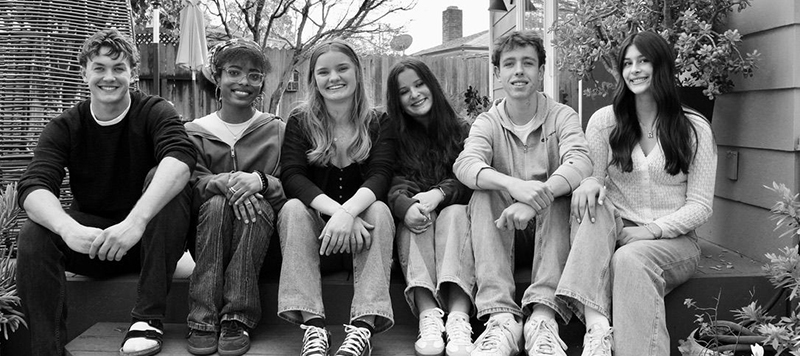
Six Free to Be Teen Innovators smiling together on a porch step
Free to Be Teen Innovators. Photo courtesy of Free to Be.
Support for parents. Free to Be also hosts Parent Resource Events, where parents and caregivers can learn practical tools, ask real questions, and connect with others navigating the same stage of life. Since the pandemic, a big focus for both kids and parents has been building healthy coping skills.
In the 2025–2026 school year, Free to Be reached 2,242 students in 85 classrooms across 19 schools and 11 school districts, from Cloverdale to Petaluma. That’s up from 16 schools the year before.
After the workshops, 88% of students said they were likely to choose kindness or stand up for someone being bullied. As one freshman put it: “It made me really think about how much my confidence is valued and I should not allow people to take that from me.”
Bring the Conversation Home
Free to Be sends families home with simple ways to keep the conversation going. A few favorites from their parent materials:
Ask: What made you feel proud today? Home tip: praise effort, not perfection.
Ask: What did you appreciate about a friend today? Home tip: talk about your own friendships. Kids learn from your real-life examples.
Ask: Who are your trusted adults at school? Home tip: remind them that asking an adult for help is a strong decision.
Ask: What’s fun about being online? What’s tricky? Home tip: create a simple family tech agreement together.
And if something ever concerns you, Free to Be encourages parents to reach out anytime.
Get Involved This November
November is a great time to get to know Free to Be.
Youth Mental Health First Aid (for adults): Thursday, November 12, 9 a.m.–4 p.m., Sonoma Clean Power, 741 4th Street, Santa Rosa. This course teaches adults how to recognize and respond to signs of mental health and substance use challenges in kids ages 12 to 18. It’s open to parents, teachers, coaches, and anyone who works with youth. Registration is required: sign up here.
Teen Mental Health First Aid (for teens): Sunday, November 15, 12–4 p.m., Free to Be’s new office, 1260 North Dutton Avenue, Suite 220, Santa Rosa. Teens learn how to spot when a friend is struggling and how to help. Registration is required: sign up here.
THE Event: Saturday, November 14 at 5 p.m., Vinarosa Resort & Spa. Free to Be’s annual fundraiser supports its work in local classrooms. SOMO is proud to be a sponsor. Get tickets or donate.
You can also learn more, donate, or bring Free to Be to your child’s school at freetobeteens.org.
When kids feel confident in who they are, they make better choices for themselves and for each other. We’re grateful to have organizations like Free to Be working alongside Sonoma County families.
Santa Rosa women's group creating sense of belonging, community
By: The Press Democrat | Published 08.05.2026
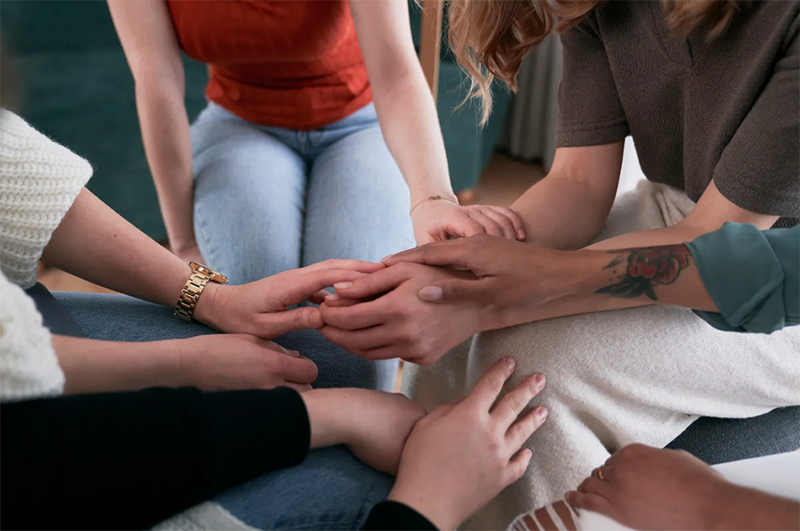
In a time when many in our community are struggling with the cost of living or feeling a bit isolated, one local organization is proving to be like a beacon of light. Santa Rosa Women for Good has provided help for the community while also bringing a sense of belonging and community to the women involved. They come together to give back and while doing so they themselves feel embraced by a community of like-minded women.
The group started when board member Amanda Garland said yes to a question. Grapevine Giving Foundation was looking for local women who might be interested in starting a giving circle through their platform. Garland said she could do that.
“We call her the number one woman for good,” said Alex Hailey, board president and executive director of Women for Good.
Other women began to join her. There were four women at their first meeting in November of 2022. Hailey joined shortly after in the Spring of 2023. After a recent event their numbers climbed to 130 members.
“We’re growing by leaps and bounds,” Hailey said.
The Grapevine Giving Foundation processed all of their donations for the first few years. As the group grew and expanded they decided it was time to apply for their own nonprofit status. Santa Rosa Women for Good gained that status in January.
One of the great strengths of the group is that they are all coming together to do the work.
“So many of the women in our group were looking for a way to give back or make a difference,” she said. “I think so many of us feel that desire to get involved or make a difference, but you know we’re not millionaires or billionaires and we don’t have unlimited time and resources. However if a bunch of women each give $100 that very quickly adds up.”
That’s exactly what they’ve done. To date Santa Rosa Women for Good has raised and awarded $80,000 in grants to Sonoma County nonprofit organizations serving a variety of different needs, including youth and families, education, healthcare, food security, environmental stewardship, arts and culture and community wellness. The funds are raised by its members.
Hailey said the group is proud of the impact they’ve been able to make and that it has also evolved past the initial idea of raising grant money.
“It’s become a way for women to kind of get connected and to learn about local nonprofits,” she said. “Sometimes we go do tours of facilities, and we volunteer, usually at least once a month. We were at the [Redwood Empire] food bank on Tuesday and we do that quarterly.”
Building connection
Another important benefit the women in the group are experiencing is something more personal and sometimes unexpected. There is a camaraderie being built when they get together over their shared goal of helping the community. That feeling of being a part of something truly good along with being among a group that is warm and welcoming has endeared the organization to its members.
“Women and people in general just have a desire for connection, which can be really hard,” Hailey said. “We hear about the loneliness epidemic and people wanting to make friends and meet people and this group has really facilitated that for a lot of people. We have a lot of new members who come because they’re just looking to find a new friend or find nice people to kind of be in community with.”
Hailey said that idea of connection was one of the reasons she became involved with the group.
“At that time we were all kind of coming out of the pandemic,” she said. “I think for a lot of us, our world had gotten really small. I work from home, you know, we’re all trying to find ways to connect personally.”
She said when she got the invitation to check the group out she took a little bit of a leap of faith and decided to go to a meeting and just see what it was. It became clear really quickly to her that was just a bunch of really nice women who want to do some good together. “It was really lovely,” she said.
Hailey noticed that at every event they host someone new will show up. At first, they’re a little nervous or they’re not sure and they’re waiting to see what the catch is.
“And pretty much every single time by the end of the event, their shoulders are relaxed and I see them laughing,” she said. “I’ve had so many folks come and tell me they just felt so welcome and that really started from the beginning. That’s just the vibe that we’re going for, and it’s so important to us that that continues.”
Although they do have a place on their website to make a donation, Hailey said their biggest invitation is for local women to come check it out and consider being a part of the Women for Good community.
“We do a once-a-month coffee meet up,” she said. “It’s super casual. We do that on a Saturday morning.”
Easy to be involved
Hailey believes one thing that makes their giving circle a little different from some other types of organizations is that they want it to be easy and fit into people’s lives.
“There are no strings attached and there is no nagging in this group,” she said. “There’s no requirements. We never ask that anyone go to any events or donate or volunteer a certain number of hours or participate in any way besides what really brings good into their own life.”
She said they have members that she’s never met who maybe just donate and contribute that way. Other members might not donate but they love to volunteer.
“It’s really lovely,” she said. “We want people to find a way to engage and just support goodness locally and help make things better and more connected locally in whatever way makes sense for them.”
The group’s welcoming atmosphere regardless of one’s commitment level has been helpful for members like Leslie Jordan who has been in the group for three years. She doesn’t get to attend as many events as she’d like because of work and being a busy mom.
“But whenever I go they’re so excited to see me and there’s no pressure. You know, it’s like do what you can. We’re just glad you’re here,” Jordan said. “So, yeah, I would say it’s extremely inclusive, extremely open, and extremely like-minded women. It’s all ages too, it’s everything, it’s eclectic and I really appreciate that piece. It’s a really positive experience of community. You feel it when we’re together. It’s really a special group of women.”
Jordan said the overwhelming common thread among the members of Women for Good is the desire to serve the community. “And for me personally, I like showing my kids the importance of that through example,” she said.
Jordan is the executive director of a small local nonprofit called Free to Be and that organization was awarded a grant by Women for Good two years ago. Free to Be helps support youth with mental health and building confidence to make healthy choices.
Free to Be has a curriculum that they teach in local fifth-and sixth-grade-classrooms. They also have a teen program where they train teens to go in and talk to the younger students about these topics. “So it’s a very nice peer-to-peer-program where the younger kids are really listening,” she said. “It’s a special moment when that happens, when you see them light up and something clicks.”
Jordan’s mother Sue Bisbee founded Free to Be in 1989, and four years ago Jordan stepped in as executive director. She said they’ve shifted their focus a bit because concerns are different than they were in the late ’80s.
“I like to say when she started it, the risks of teens were a little more external,” Jordan said. “It was drinking and driving and teen pregnancies and things like that. Now it’s kind of become internal, it’s anxiety and depression, so we focus on a lot of the emotional health, internal things for the kids.”
She said after the pandemic a big focus has been on developing good coping skills. They also help parents with skills to adapt to the challenges their kids are facing these days as well.
Community giving
Santa Rosa Women for Good pools together funds raised by its members. Each quarter local nonprofits are nominated by group members and selected through a community voting process. Sonoma County nonprofits can also get in contact with Santa Rosa Women for Good to be considered for nomination.
Past grant recipients include women-led Wiley’s Wish Animal Rescue; and Positive Images, a Sonoma County–based nonprofit dedicated to supporting LGBTQIA+ youth, adults, and families.
Santa Rosa Women for Good awarded a $5,000 grant to Free to Be.
“That’s significant for a small organization, so I was very thrilled,” Jordan said. “It was wonderful.”
With that grant funding they’ve been able to invest a lot in their team leadership program. “It’s been a real focus,” Jordan said. “We do youth mental health first aid training, a team leadership retreat, things like that for them.”
Frances (Fran) Templin is another member of Santa Rosa Women for Good who works to support mental health in the community. Templin has been with the group for three years, since the day her nonprofit was being awarded a grant.
Templin is the founder of The Zane Templin Foundation, which was created in remembrance of her son, who took his own life in 2016. The organization works to support mental health awareness and suicide prevention in the community.
“My son Zane has been gone for 10 years now,” Templin said. “It’s very important to me that we get out there in the community and support anyone going through what we went through.”
The Zane Templin Foundation also supports other community organizations that do suicide prevention work. Their website lists close to 40 community organizations that the foundation has helped.
“We are big supporters of the American Foundation for Suicide Prevention, which hosts an Out of the Darkness community or campus walk every year,” Templin said. “This year it was at the Santa Rosa Junior College in April and the Santa Rosa Women for Good came out and supported the walk.”
The Zane Templin Foundation received its nonprofit status in 2021 and has raised over $200,000 with the annual walk. Templin said that they’ve helped over 80 families with the cost of therapy since they started the foundation.
Besides the grant, Women for Good members raised money for the Zane Templin Foundation individually by signing up with Team Zane on the Out of the Darkness walk. Members who raised $100 were then given a “You Matter” t-shirt to wear during the walk.
Templin spoke fondly of the women she’s come to know in Women for Good. “I love all the women involved,” she said. “They do so many different things in the community and they’re so kind. I truly love that women are helping women in the community with whatever they need.”
Growing the good
Women for Good recently hosted their first Grow the Good community celebration. It was a large event and she said they had invited a bunch of past grantees and nonprofits.
“It was a really nice event,” Hailey said. “Our goal really was just to celebrate them, celebrate what we have accomplished and unveil that we’re expanding our grant programs.”
Hailey said it was not a fundraising event but rather a celebration. She said they are hoping to raise more money in the future so that they might give out even bigger grants. That’s one of her favorite parts of her role in the organization.
“I get to help give large amounts of money away,” she said. “There’s nothing better than calling someone and telling them, you know, hey, guess what, we have $5,000 for your organization, no strings attached.”
Hailey said that the members of Santa Rosa Women for Good feel strongly that one woman can really have the power to make a difference and to have some transformative effect.
“We started with just one person, now we’re 130 women and that becomes a movement,” she said. “There’s a real movement for good happening.”
free to be builds confidence in Sonoma County youth,
empowering them to make healthy choices in today's ever-changing culture.